Showing posts with label Saab. Show all posts

Tuesday, February 15, 2011

Mr. SAAB celebrates 50 years since 1st RAC Rally victory

Erik “Mr. SAAB” Carlsson, the legendary rally driver who won the first British RAC Rally, and his co-driver, Stuart Turner, are celebrating the 50th anniversary of their victory with a replica of their winning car.

Erik, who is an ambassador for SAAB, was a guest of honor at a lunch organized by SAAB Great Britain at the RAC Club in London. On display at the Club was a replica of the SAAB 96 with which Carlsson and Turner won the rally in 1960. The car was shipped from the company’s Car Museum in Trollhättan, Sweden, and will be on display at the Club for a week.

Carlsson’s victory at the RAC Rally left many dumbfounded in 1960, as the small Swedish car was powered by a diminutive 750 cc, 2 stroke, 3 cylinder engine, and faced competitors that were much bigger and had more power. Erik Carlsson and that red 96 won the RAC Rally three years in a row, plus the Monte Carlo Rally twice, as well as the Rally San Remo and the notoriously tough Acropolis Rally. The wins helped launch SAAB as a respectable international brand.

Stuart Turner, the co-driver, went on to become competition manager of BMC and Ford UK. Turner shared the spotlight with Erik at the lunch at the RAC Club.

At the occasion SAAB Great Britain launched a new special version of the SAAB 9-3 named after Erik. The 9-3 Aero Carlsson Edition will be limited to 96 cars. It is not the first time that the Scandinavian auto maker names a car after Erik Carlsson. Between 1990 and 1992 SAAB produced a 600-car limited edition of the 900 Carlsson Edition. “I feel very honored to have a car named after me”, said Mr Carlsson.

Monday, February 14, 2011

New Saab Planning to Offer Customers Ability to See Cars Being Built

In this modern age of convenience and technology, consumers want their products now. That is particularly the case in America with our automobiles.

Unlike other continents such as Europe, we buy our cars off the lot and don’t do order to specification. To those with a bit of patience, placing an order to get exactly what you want is the best option especially with such a major purchase.

BMW is one manufacturer aiming to show the benefits of that method with a new build-to-order campaign for the X3, and Saab appears to be aiming to make it more attractive as well.

It works sort of like a tracking number for a package, tracking it all the way to delivery – only even better. According to What Car Saab aims to expand this model into the automotive sector and they way they are doing it is innovative.

The company is currently installing cameras inside its Trollhättan factory. The camera will text message a customer photos of a their specific vehicle being built at certain points in the assembly line.

The plan is to add a real-time video feed later as well, something BMW is doing with the X3. For techies like us, we love to see manufacturers doing stuff like this. And who better than Saab, one of our favorite brands?

LA 2010:New Saab Unveils Production 9-4x

It’s good to see signs of life at Saab after everything they’ve gone through recently. After all, it wasn’t too long ago they were being consigned to the dustbin of history by everyone in the industry, left for dead after 20 years of neglect by parent company GM. They’ve just released details and images of their next offering, the 9-4x, before it’s debut at the Los Angeles auto show. And while it might not be my cup of tea, less just be thankful it’s happening at all.

The 9-4x is basically the Saab version of the Cadillac SRX, which shares a lot of parts with the newly redesigned Chevy Equinox. In fact, to put it in perspective it’s helpful to think of this new Saab as an SRX with a Saab interior layout and exterior design. Remember that the 9-4x was developed entirely under GM management, so the fact that it’s an SRX clone is no surprise – it was intended to be from the beginning. What sets the 9-4x apart from it’s GM twin, and indeed the rest of the fast-growing luxury crossover market? It’s Saab-ness.

The chassis employs all of the latest and greatest technology in an effort to make this pseudo-truck handle like a car. Which is sort of like engineering a golf club to hit baseballs really far, but crossovers are all the rage these days, so I suppose we’ll go with it. All 9-4x models will come with XWD, Saab’s catchy name for Haldex IV AWD. It uses an infinitely-variable split center differential to apportion torque front to back, as well as an eLSD (electronic limited slip diff) in the rear to actively apportion torque side to side, to maximize transient responses and stability. There’s also Saab DriveSense, which is a combination of variable damping as well as programmable throttle and shift patterns. The three settings (Comfort, Sport, Eco) adjust damping levels, throttle response, and shift points. Sport tightens the shocks and sharpens the throttle as well as holding upshifts at part-throttle; presumably Eco upshifts at 1,200rpms and yells at you in Swedish if you floor it. Comfort is the default mode.

The 9-4x shares powertrain choices with the SRX,with the standard engine being a naturally-aspirated 3.0L 24v direct-injection V6 with 265 horsepower and variable valve timing. It will be available with front-wheel drive or XWD, and nets a 7.9s 0-60 time in FWD form and 8.4s with XWD, with average fuel mileage of 20 and 19 for the two, respectively.

The Aero models receive a 2.8L 24v twin-scroll turbocharged, port injected V6 with an even 300bhp, shared as well with the new 9-5 Aero sedan. The 2.8L Turbo makes peak torque of 295lb-ft between 2,000-5,000rpm. With standard XWD, it averages 18mpg and does 0-60 in 7.7 seconds. If you get the Aero, remember to fill it up with 93 octane. Both of these all-aluminum V6′s are mated to six-speed automatic transmission, with no manual option.

Despite it’s GM roots, from a styling standpoint the 9-4x is clearly a Saab in a lot of ways. The front bumper is inspired by the well-received Aero X concept car from 2006. Blackout trim on the A and B pillars give the 9-4x the wraparound glass feel that 900 owners love, and the traditional “hockey stick” C pillar is present, although the proportions on this implementation give it an unfortunate resemblance to a Lexus RX350 from the side. The rear-most pillars are blacked out to give the rear glass the wraparound treatment as well, helping to disguise some of the 9-4x’s visual mass quite effectively compared to the chunky-looking SRX. Overall, they’ve done very well with what they had to start with.

The interior takes it’s inspiration from the new 9-5, with a subdued driver-focused cockpit design with grey trim and green lighting, drawing on Saab’s aircraft design heritage. There’s a whacky aircraft-style speed indicator embedded in the speedometer, and of course the signature Saab ignition in the center console between the seats. It’s a push-button starter, but hey! It’s still in between the seats! The overall look in the interior is less glitzy and chrome-slathered than the SRX, and it suits me better.

Interior niceties include USB/Aux connectivity, an optional 8″ touchscreen navigation system with a 10GB hard drive and 5.1 surround sound. There is of course OnStar and Bluetooth connectivity, and a separate climate channel is optional for the rear seats, along with 8″ displays in the back of the headrests and a separate A/V control.

The 9-4x is making it’s official debut at this year’s Los Angeles Auto Show in the near future. It should be arriving at dealerships in May of next year, and pricing and official EPA estimates should be available closer to that date. While the fuel estimates may be disappointing, and it’s clearly a GM product with a Saab face, let’s remember: this is better than no Saabs at all. Or worse, GMC Envoys and Subaru Imprezas dressed as Saabs. Count your lucky stars.

Mr. SAAB celebrates 50 years since 1st RAC Rally victory

Erik “Mr. SAAB” Carlsson, the legendary rally driver who won the first British RAC Rally, and his co-driver, Stuart Turner, are celebrating the 50th anniversary of their victory with a replica of their winning car.

Erik, who is an ambassador for SAAB, was a guest of honor at a lunch organized by SAAB Great Britain at the RAC Club in London. On display at the Club was a replica of the SAAB 96 with which Carlsson and Turner won the rally in 1960. The car was shipped from the company’s Car Museum in Trollhättan, Sweden, and will be on display at the Club for a week.

Carlsson’s victory at the RAC Rally left many dumbfounded in 1960, as the small Swedish car was powered by a diminutive 750 cc, 2 stroke, 3 cylinder engine, and faced competitors that were much bigger and had more power. Erik Carlsson and that red 96 won the RAC Rally three years in a row, plus the Monte Carlo Rally twice, as well as the Rally San Remo and the notoriously tough Acropolis Rally. The wins helped launch SAAB as a respectable international brand.

Stuart Turner, the co-driver, went on to become competition manager of BMC and Ford UK. Turner shared the spotlight with Erik at the lunch at the RAC Club.

At the occasion SAAB Great Britain launched a new special version of the SAAB 9-3 named after Erik. The 9-3 Aero Carlsson Edition will be limited to 96 cars. It is not the first time that the Scandinavian auto maker names a car after Erik Carlsson. Between 1990 and 1992 SAAB produced a 600-car limited edition of the 900 Carlsson Edition. “I feel very honored to have a car named after me”, said Mr Carlsson.

Friday, February 11, 2011

New Saab Plans for Significantly Increased U.S Sales in 2011

Saab has been slung through the mud over the past few years, amidst back-and-forth reports of a sale. Coverage in 2009 wasn’t particularly confidence inspiring.

With that as a backdrop, it is a wonder Saab sold cars any last year. The company logged just 5,445 units sold. Recently, the talk has all been positive, with Saab’s message on the new 9-5 and 9-4X and future models to come.

Advertising has also resumed, helping to make the marketplace aware of Saab’s return. At the National Automotive Dealers Association, Saab has revealed to dealers its predictions for 2011′s sales.

The brand is predicting 15,000 to 20,000 vehicles this year, aided by a rebounding economy, the new 9-5 which will have full availability, and the 9-4X crossover arriving in May. The 9-4X particularly has a lot of promise as crossovers are the hottest market segment in the United States.

Also making news is a promotion that the brand plans to launch called Independence Day, which celebrates 1-year since being purchased from General Motors.

We aren’t sure it will connect with the general populace though, who are most likely unaware of the significance of such a promotion. 2011 also happens to be the year Saab celebrates its 100th anniversary. Hopefully Saab will ring in its next century with significantly increased sales.

Saturday, February 5, 2011

New Saab Prices 2012 9-4X Crossover

Property Spyker Saab goes ahead with the introduction of new products being developed is owned by General Motors. 9-5, but went on the market, and Saab sales to accelerate the car for the 2011 model year as a cheaper iterations are available.
9-4X, Saab, where many hope in the near future, although they live. Crossover is an extremely hot market now, and that Saab wants action to participate in the 9-4X.

The new crossover was introduced at the Los Angeles Auto Show last month and had to go on sale in May next year. Today, Saab announced prices for the 9-4X, and it seems to be right in the sweet spot for luxury crossover segment.
Moreover, in beautiful Saab 9-4X the price close to Cadillac SRX platform to embark on a page using standard 9-4X $ 34,205, including destination charges. Standard model with front wheel drive and is powered by 3.0-liter V-6 of 265 horsepower. 9-4X Premium starts at $ 38,075 and maintain the same engine, when all four wheels to add.

9-4X Aero will dent your wallet a lot more jumping to $ 48,835. 9-4X Aero replaces 3.0-liter V-6 2.8-liter turbo engine makes 300 horsepower and power all four wheels.
We believe that the new 9-4X segment offers an extraordinary package, and a little different than what everybody does. The good thing is the number? See if the market once, when 9-4X, sales in May 2011.

Sunday, January 23, 2011

New Saab Teases 9-5 SportCombi

At the Los Angeles International Auto Show last year, Saab debuted its new 9-4X crossover. The 9-4X is aimed at getting Saab a piece of the red-hot crossover segment in the United States. In Europe though, their more practical wagon counterparts are big sellers.

As such, it is a critical part of Saab’s sales growth strategy to introduce a wagon variant of the 9-5. Introduction of the new SportCombi, as it is called, is set to happen at the Geneva Motor Show in March. Saab has released a teaser photo of the new variant, shown below.

It looks very similar to renderings and spy shots that we have seen. And boy is that a good thing – the 9-5 promises to be a very stylish offering for Saab that should help it gain significant sales in Europe.

Reports point to carried over engines and options from the sedan 9-5. That means a base model turbocharged 2.0-liter inline-four making 220 horsepower and an up-level 2.8-liter turbocharged V-6 producing 300 horsepower.

Of course, Saab’s XWD all-wheel drive system will also be optional. Now the question is if we’ll be getting this in the U.S. We aren’t sure it would sell too well – just look at how Cadillac’s CTS Sport Wagon is faring.

Monday, October 18, 2010

Crossover Saab 9-4x

Saab has just unveiled today the new Saab 94X, the company's new crossover. The model that will be premiering at the Los Angeles Auto Show next month is using the Theta Premium platform (owned by GM) is also used by the Cadillac SRX and designed entirely in Detroit.

Saab 94x
Saab 94x


Production of 9-4x will be conducted simultaneously with SRX at the GM plant in Ramoz Arizpe, Mexico. His figure is likely closer to 9-4x BioPower concept that is present at the Detroit Auto Show 2008.

Saab offers a choice of two drive systems (2WD) and four-wheel drive (4WD). The Saab 9-4X will be powered by a 2.8-liter V6 turbo engine developing 300 hp at 5,500 rpm and 400 Nm of torque at 5,000 rpm or a 3.0i V6 engine developing 265 hp at 6,900 rpm and 302 Nm of torque at 5,200 rpm.

Crossover Saab 9-4x Photo Gallery:

Saab 9-4x 1Saab 9-4x 2Saab 94x 3Saab 9-4x 4


Saab Press Release:

The new Saab 94X brings unique Saab design and engineering values to the growing mid-size crossover segment. With distinctive Scandinavian and aircraft-inspired looks, it also offers car-like handling and ride characteristics that challenge class benchmarks.

Making its world premiere at next month’s Los Angles Auto Show, the Saab 94X expands Saab’s product portfolio to three car lines and will provide a fresh, alternative choice for independently-minded crossover buyers. It is an important next-step in the Swedish brand’s renaissance as an independent premium car manufacturer.

Muscular and sporty to drive, the Saab 94X is aligned in looks and size between the 9-3X all-rounder and new 9-5 sedan. Outside and inside, it communicates its Saab identity with clean, uncluttered design and signature motifs, such as its wraparound-effect windshield, ice block lighting theme, driver-focused cockpit and flexible cargo handling.

In true Saab tradition, the Saab 94X delivers on its sporty persona. It is configured around a unique, purpose-designed crossover body structure, which has been key to delivering its exceptional handling and ride properties. Car-like driving dynamics are supported by Saab’s advanced all-wheel-drive system, Saab XWD, and DriveSense adaptive chassis control.

Under the hood, nestles a choice of compact and efficient V6 engines, naturally-aspirated or turbocharged. The 265 hp, 3.0-liter motor for the entry-level model features direct fuel injection and variable valve timing; while the 300 hp, 2.8-liter exchanges direct injection for twin-scroll turbocharging and is exclusive to top-of-line Aero variants. Both engines are mated to six-speed automatic transmissions under adaptive, electronic control.

“The Saab 94X significantly broadens the appeal of the Saab brand,” says Saab Automobile CEO Jan Åke Jonsson. “It gives us entry to the fast-growing crossover segment with a vehicle that reflects our brand values in key areas, such as progressive Scandinavian design and sporty, responsible driving performance. The Saab 94X is an exciting package and we’re confident it will appeal to many existing Saab owners, as well as win new customers for the brand.”

The Saab 94X goes on sale in North America in May next year, with sales in Europe and other global markets due to begin from August. Prices will be announced shortly before sales commence.


Body sculpted by Saab
The Saab 94X cuts a broad and powerful stance, with clean, uncluttered lines that echo Saab’s Scandinavian design ethos. Its distinctive face, in common with the new 9-5 sedan, draws inspiration from the award-winning Aero X concept car, with a deep, three-port grille and ‘ice-block’-effect lighting themes.

Disguised windshield and door pillars create Saab’s signature wraparound-effect, the single glasshouse graphic emphasizing the brand’s traditional ‘cockpit’ look. Other exterior Saab identifiers include the shaping of the headlamps, a ‘hockey stick’ waistline and strong C-pillars complemented by a wraparound-effect rear screen.

The roofline is visually lowered and extended by a rear spoiler integrated in to the tailgate. At the rear, the lighting carries forward a signature introduced by the new 9-5 sedan. An ‘ice-block’ bar lit by LEDs extends across the lower tailgate and wraps around the light units. Twin rhomboid-shaped exhaust tailpipes are also neatly integrated into the lower bumper molding.

Overall, the Saab 94X’s bodywork is noticeably free from unnecessary decoration or trim. A dark protective appliqué is applied to the lower body, but there are no wheel-arch claddings or protective body panels.

Entry-level variants are fitted with 18-inch, six-spoke alloy wheels and Aero models are distinguished by 20-inch, nine-spoke ’turbine’ alloy wheels, as well as a black mesh front grille.

Cockpit-inspired cabin

The spacious cabin provides comfortable accommodation for up to five adults and is defined by a signature Saab, driver-focused cockpit layout. The center console, center stack and main instrument display are presented within a single form that sweeps up around the driver. For the Saab 94X, this is finished with wood or, for Aero interiors, a carbon fiber-effect trim.

Other subtle references to Saab’s aviation heritage include a selectable, aircraft attitude-style speed read-out, green illumination for the needles of the three main dials and traditional Saab ‘joystick’ adjusters for the mesh-style air vents. The ignition – a start/stop button – is, of course, located between the front seats, in true Saab tradition, adjacent to the shift lever.

Large, supportive seats include a standard, 8-way electrical adjustment for the driver and an optional electrical adjustment of the foot pedals. Rear passengers enjoy particularly roomy accommodation as rear space is not compromised by the presence of a third row of seats. They also benefit from an independent, three-way manual adjustment of the rake of each 60/40 fold seatback.

Ample onboard storage includes double-decked pockets in all doors, a two-tier front glovebox and a deep bin in the center console with 12-volt, USB and AUX connections. Rear passengers have additional storage in the rear face of the center console and the center armrest.

Infotainment includes two audio options, a seven-speaker or top-of-the-line, 10-speaker Bose system with 5.1 surround sound. The optional 8-inch touchscreen, hard disk-based navigation system includes a bird’s eye map view and 10 GB storage for ‘jukebox’ music files. Communication on the move is supported by an integrated Bluetooth hands-free phone system, which functions via voice command and steering wheel controls, as well as the infotainment panel.

In the rear, passengers can enjoy independent climate control, in addition to the standard dual-zone system, and select their own onboard audio/visual entertainment through a dedicated unit in the back of the center console. This has a video AUX input and two 8-inch screens in the rear face of the front seatbacks.

Adaptable cargo carrying
The trunk of the Saab 94X is optimized for space and ease of use. The 60/40 split seatbacks fold down in a single movement, without having to move the seat cushions or remove the retractable head restraints, providing a completely flat cargo deck.

The front section of the trunk floor is hinged and can be opened via an aircraft-shaped handle to reveal an additional under floor storage. Floor space can be tailored as required by an optional, U-shaped track with a telescopic cargo dividing rail, which can be moved to any position to keep items in place.

For additional convenience, the tailgate is available with a remotely controlled, hydraulically powered operation. It can open fully, or to a lower, programmable position if there is restricted clearance overhead, such as in the garage.

On the move

The Saab 94X brings car-like handling and ride qualities to the crossover segment. Extensive development testing alongside competitor vehicles shows the Saab 94X has a level of dynamic performance – in ride refinement as well as handling - that challenges the very best in its class..

Key to such excellent driving qualities is a unique body structure, purpose-designed for a crossover application and free from compromises through adapting an existing sedan or wagon format.

Advanced driving technologies include Saab XWD, the sophisticated all-wheel-drive system, which infinitely varies drive torque between the front and rear axles. This pre-emptive, light and fast-acting system offers optimized grip in all conditions, dry or wet, smooth or loose, on road or off-road. It is combined with an electronically-controlled, rear limited-slip differential (eLSD) which can transfer up to 50% of rear torque between the rear wheels, to whichever has more grip

Driver and vehicle in the Aero are brought even closer together by Saab DriveSense, an adaptive chassis function which uses real time damping control to help the Saab 94X react to how it is being driven and to changing road conditions. In addition to the default ‘Intelligent’ setting, the driver can select ‘Comfort’ and ‘Sport’ modes. An ‘Eco’ mode, activated via a separate button, also re-maps the throttle pedal and gearshifting patterns for optimal fuel economy.

Other driving aids include variable effort steering, a function of Saab DriveSense, and standard bi-xenon adaptive lighting, which provides better illumination of upcoming bends by linking the direction of the headlamp beam to the steering angle.

Efficient power packs

The powertrain line-up comprises two efficient all-aluminum V6 engines, both with a six-speed automatic transmission and Saab XWD. These light and compact, 24-valve motors feature variable valve timing, on both inlet and exhaust sides, and boast power ratings typical of larger displacement engines.
A 265 hp (195 kW), 3.0-liter naturally-aspirated motor for the entry-level specification includes direct fuel injection. It propels the Saab 94X from zero to 100 km/h in just 9.0 seconds.

Available exclusively in Aero specification, the 2.8-liter turbo engine packs 300 hp (221 kW) and generates an impressive 400 Nm spread of torque between 2,000 and 5,000 rpm. It delivers zero to 100 km/h acceleration in 8.3 seconds. Fuel consumption figures for both engines are still being finalised.


Leading safety performance

Excellent safety complements strong performance, and the Saab 94X benefits from more than 50 years of Saab experience in working with occupant protection. Saab crash testing and computer simulations are based on what happens in real collisions, on real roads. Many in-house tests developed by Saab are over and above those legally required or carried out by consumer test organizations.
The success of Saab’s work is reflected in surveys of real-life collisions by the US Highway Loss Data Institute (HLDI) and the Swedish Folksam insurance company, where Saab cars have consistently scored well, several times being ranked best in their segment. The Saab 9-3 and the new 9-5 sedan are also maximum 5-star performers in EuroNCAP crash safety tests.

Car-like Driving Fun and Ride Comfort

  • Purpose-designed crossover body structure delivers car-like driving quality
  • Adaptive chassis technology: Saab XWD and Saab DriveSense
  • Advanced infotainment: hard disc storage, rear seat entertainment
  • Safety systems leverage more than 50 years of Saab real-life crash safety experience
The Saab 94X’s advanced chassis offers car-like handling characteristics, with sporty and responsive driving qualities that challenge the best in its class.

Sophisticated technologies include Saab’s DriveSense adaptive chassis, with real-time damping control, and Saab XWD, a cutting edge all wheel-drive system with an electronically-controlled rear limited-slip differential (eLSD).

Comfort and convenience features include a start/stop button, keyless entry and exit, a powered tailgate, adaptable cargo stowage, tri-zone air conditioning and rear seat entertainment packages. Satellite-navigation with an 8-inch touchscreen, Bose surround sound system and hard disc ‘jukebox’ music storage are among the infotainment options.

Behind The Wheel
The Saab 94X has been developed to deliver a nimble, responsive driving experience that belies its size and height. Car-like and fun to drive, it is equally at ease on smooth roads or loose, slippery surfaces.

It benefits from a unique body structure, specifically designed for a crossover application. This has enabled engineers to establish key vehicle dimensions - such as wide front and rear tracks (1,622 and 1,623 mm respectively) and the suspension geometry – without being compromised by adapting an existing sedan or wagon format. While offering the security of a raised, ‘command’ driving position and a ground clearance of 200 mm, the Saab 94X concedes little or nothing in its dynamic performance.

Extensive testing alongside competitor vehicles validated the Saab 94X’s qualities for ride refinement, noise suppression and handling. In a variety of test configurations, its performance challenged the very best in class.

A stiff body structure, with a torsional rigidity rating of 31 Hz, is key to ensuring refined ride characteristics and good suppression of noise, vibration and harshness, as well providing a solid foundation for the location of suspension mountings.

Front suspension is by McPherson struts with hydraulic lower A-arm ride bushings and a hollow-section anti-roll bar. An independent, linked H-arm layout is used at the rear. This sophisticated system, with isolated sub-frame mountings, enhances ride comfort, reduces vibration entering the cabin and improves roadholding. Shear bushings in the damper mountings to the body further dissipate vibrations from the road and improve noise isolation.

To deliver an enhanced ride quality, unsprung weight has been minimized by the use of weight-saving aluminum for all brake calipers, the front wheel hubs, A-arms, steering knuckles and rear suspension links. The powerful braking system uses 345 mm front and 315 mm rear discs, both ventilated. ESP® is fitted as standard.

“This is a truly rewarding car to drive,” says Peter Dörrich, Saab 94X Vehicle Chief Engineer, who led the development team. “We are really pleased with its excellent handling and ride qualities. We can’t wait for the public and media to start driving it.”

Advanced driving technologies build on the capabilities of the Saab 94X’s chassis. Chief among these are:

Saab XWD with eLSD

This advanced all-wheel-drive system offers a more rewarding driving experience and greater control in all conditions, dry or wet, on and off-road.

Already successfully launched in the Saab 9-3 and 9-5, this pre-emptive, active system has been integrated and optimized by Saab chassis engineers. It uses a multi-plate Haldex clutch unit which infinitely varies the delivery of drive torque between the front and rear axles. Careful programming enables the application of rear drive to balance oversteer and understeer characteristics, as well as ensuring optimal grip in loose or slippery conditions. The ESP® system is also tuned together with XWD to optimize the chassis’s sporty potential without reducing safety margins.

An electronically-controlled rear limited-slip differential (eLSD) can transfer up to 50% of rear torque between the rear wheels, to whichever has more grip. Under hard cornering on the open road, or when completing a high speed maneuver, the brief application of more or less torque to either wheel also helps the rear of the car more closely follow the direction of the front wheels. In loose or slippery conditions, traction is also further improved.

Saab XWD with the eLSD is fitted as standard.


Saab DriveSense
This adaptive system includes real time damping control with a range of adjustments that helps the vehicle adapt to the way it is being driven.. In addition to the default ‘Intelligent’ mode, two further settings, ‘Sport’ and ‘Comfort’, can be selected via a rotary knob next to the gear shift.

In real time, ‘Intelligent’ mode adjusts the car’s handling characteristics in response to driving style. It continually varies the stiffness rates of the electronically-controlled dampers, the action of the electronic throttle and the degree of power steering assistance. For example, when the car is being driven in a sporty style, the action of the dampers is automatically stiffened to improve body control and roadholding; the throttle pedal movement is shortened for a faster response and steering assistance is reduced for a more direct feel. At reduced speeds, the dampers are softened for greater ride comfort, the action of the throttle pedal becomes less aggressive and the steering feels lighter.

The ‘Sport’ setting introduces a firmer range of adjustment for the dampers, offering even greater body control. In addition to sharpening the throttle pedal response and enhancing steering feel, ‘Sport’ mode also raises the gear shifting points of the automatic transmission and sends more drive torque to the rear wheels.

By contrast, ‘Comfort’ mode, optimizes ride refinement by enabling a softer range of adjustment for the dampers and a smoother throttle pedal action. It provides enhanced compliance over rough road surfaces.

‘Eco’ mode, unique to the Aero model and activated via a separate button, is focused on optimizing fuel economy and includes the appropriate management of gear shifting patterns and re-mapping of the throttle pedal action.

DriveSense is standard fit for Aero models.

Variable Effort Steering (VES)
When maneuvering, parking or driving at low speeds, VES increases the level of power assistance in order to reduce steering effort. At higher speeds, assistance is automatically reduced to ensure a high degree of steering ‘feel‘ for the driver.

VES uses an electro-magnetic motor on the steering rack, controlled by a coil, to boost or reduce the level of hydraulic assistance. VES also adapts to the speed at which the steering wheel is being turned, providing progressively increased assistance the faster the wheel is rotated. VES is a function within Saab DriveSense and comes as standard for Aero models

Comfort, Convenience and Safety
Occupants of the Saab 94X benefit from state-of-the-art features that enhance the travel experience. These are focused on ease-of-use and making the cabin of the Saab 94X an enjoyable and safer place to be. They include:

Start/Stop button with keyless entry/exit
Standard throughout the range, a start/stop button replaces the conventional ignition switch. In Saab tradition, it is located between the seats next to the shifter. The engine control unit detects and authenticates a coded signal from driver’s fob and the engine can be started or stopped by simply pressing the start/stop button.

For even greater convenience, a keyless entry/exit system is also offered, which allows the car to be automatically unlocked when the door handle is pulled while the fob is still in the driver’s pocket or handbag. The car can also be locked when the driver leaves it by simply touching the lock area of the door handle. This ease-of-use feature removes the need to press the unlock/lock buttons on a standard fob.


Tri-zone air conditioning
In addition to the standard dual zone climate control for the driver and front passenger, the tri-zone option offers independent temperature control for rear seat occupants. Extended ducting feeds air from the main air conditioning unit to an outlet module in the rear face of the center console. The module includes a small fan to accelerate the airflow and two adjustable distribution vents. It is offered in combination with rear seat entertainment and available only with left-hand drive vehicles.

Advanced infotainment systems
The extensive infotainment choice offers a wide range of state-of-the-art features and two audio options: a seven-speaker or top-of-the-line, Bose system with true 5.1 surround sound reproduction. The 8-inch touchscreen navigation system includes a bird’s eye map view and hard disk drive storage for map data and music.

Audio selection is versatile. In addition to the AM/FM and DAB radio, the driver can play music directly from a CD, insert an MP3 player or memory stick into the standard USB socket, or even store 10 GB of favorite tracks on a built-in hard drive with the navigation system – all with full control via the faceplate and steering wheel. The USB socket is located conveniently alongside an AUX input and 12V power outlet in the center console. The USB ‘wires’ the device to the car and offers instant control through the audio system, the in-car display showing the song title, artist and album information.

Communication on the move is supported by an integrated Bluetooth hands-free phone system, which functions via voice command and steering wheel controls, as well as the infotainment faceplate.

In the rear, passengers can enjoy their own onboard entertainment through a dedicated unit in the back of the center console and two 8-inch screens which fold out, laptop style, from the front seatbacks. Passengers can select an alternative audio source to that being played up front, watch a DVD or enjoy entertainment from a stand-alone player, such as a games console or digital camera, connected to the video AUX input. Sound is provided by wireless headphones.

Rear-view camera
Fitted as standard on Aero and Premium models, a small lens is discreetly mounted in the deck lid to provide enhanced rearward vision when reversing. A 3.5-inch image is shown in the interior rear-view mirror, or the main display screen with satellite navigation.

Driving and crash safety
All occupants in the Saab 94X benefit from Saab’s successful real-life safety philosophy. Crash testing and computer simulations are based on what happens in real collisions on real roads, using the findings of a database covering more than 6,100 real-life accidents involving Saab cars on Swedish roads over that last 50 years. Saab safety engineers are always aware that their ultimate goal is protecting real people, not only dummies in laboratory crash tests.

According to Saab’s real-life safety strategy, the structural design of the car, and the operation of its safety systems, is evaluated through a large number of in-house crash tests which are additional to those legally required or carried out by consumer test organizations.

The success of this work is reflected in surveys of real-life collisions by the US Highway Loss Data Institute (HLDI) and the Swedish Folksam insurance company, where Saab cars have consistently scored well, several times being ranked best in their segment. The Saab 9-3 and the new 9-5 sedan are also maximum 5-star performers in EuroNCAP crash safety ratings, as is the 9-3 in US NCAP.

In addition to the full complement of occupant safety systems installed in all Saab cars, the Saab 94X includes third generation Saab Active Head Restraints (SAHR 3) as standard for the front seats, together with pre-tensioning and load-limiting for the outer rear seatbelts.

Driving, or active safety – the ability to avoid becoming involved in an accident - is also improved by bi-xenon adaptive lighting. This powerful system improves visibility for the driver and reduces night driving stress. At all speeds, the headlamps provide better illumination of upcoming bends by swiveling up to 15°, to the right or left according to the steering angle.

At speeds below 50 km/h, Town Light provides a wider, flatter beam so that pedestrians or potential hazards at the roadside can be seen more easily. At speeds above 100 km/h, Motorway Light is engaged, which increases the depth of the light beam from 130 to 170 meters. The cone is shaped so that on-coming drivers are not affected.

ESP® is fitted as standard across the range and the rear brake lights flash under heavy braking to warn following drivers.

Crossing Over with Progressive Saab Design

  • Carries forward signature Saab design cues
  • Clean exterior styling follows Scandinavian tradition
  • Spacious cabin with driver-focused cockpit
  • Flexible cargo management system
Strong, crisply sculpted and unmistakably Saab: the Saab 94X cuts a muscular stance that defines its crossover character. It takes Saab forward into a new market segment, sharing signature Saab styling cues from the new Saab 9-5 sedan.

Outside and inside, it gives fresh expression to a Saab design heritage drawn from aeronautical and Scandinavian roots. The Saab 94X takes Saab’s design language into a new vehicle class, emphasizing a feeling of strength and solidity that goes to the heart of the Saab brand.

Clean exterior design
The athletic Saab 94X brings Saab design values to the crossover segment of the first time. Like its 9-5 peer, the distinctive frontal styling of the Saab 94X is inspired by the award-winning Aero X concept car, which introduced a new deep, three-hole grille treatment and ‘ice-block’-effect lighting themes in a blue-green hue.

Other Saab brand identifiers - the wraparound-effect windshield, peaked cap header rail, the shape of the headlamps, a wraparound-effect rear screen and hockey stick waistline – are now integrated within a raised, crossover body format. The result is a vehicle with clean, uncluttered lines that reflect the simplicity of Scandinavian design principles.

The blacked-out windshield and door pillars help to create a single glasshouse graphic, emphasizing that typical Saab ‘cockpit’ look. In the style of the new 9-5, the door mirror casings are also black, instead of body-colored, so that the visual impact of the window graphic is not interrupted.

Like the new 9-5 sedan, the ‘ice block’ headlamp units include a curving, signature light tube which illuminates to give the car a distinctive identity day and night. Indicator repeaters in the front fenders also adopt the blue-green ‘ice block’ theme.

Subtle sculpturing of the wheel-arches, and a side crease that underlines the hockey stick beltline, also give a taut look to the proportions of a mid-size crossover. In keeping with Scandinavian design values, the Saab 94X’s bodywork is free from unnecessary trim. While a dark protective appliqué is coated on the lower body, the Saab 94X’s svelte lines are not sullied by additions such as wheel-arch cladding or protective body panels.

The roofline is visually lowered and stretched by a deep spoiler integrated into the top of the tailgate. The rear screen appears to wraparound the rear quarters of the car, helping to form a strong ‘C’-pillar shape, another Saab signature feature.

The rear lighting follows the same distinctive theme seen on the new 9-5 sedan. The signature ‘ice-block’ light bar stretches across the lower tailgate, wrapping around the rear light units. It gives the rear of the Saab 94X a distinctive night and day identity.

For easy loading, the tailgate opens flush with the top of the rear bumper molding, which is finished with a black, scratch-resistant insert. The rear bumper also comes with a detachable hitch cover, which preserves its good looks when a towing hitch is not required. With both engines, twin rhomboid-shaped exhaust tailpipes are neatly integrated into the lower bumper molding.

18-inch, six-spoke alloy wheels are fitted as standard, while Aero models are visually distinguished by 20-inch, nine-spoke ’turbine’ alloy wheels, a black mesh front grille and a side decor strip in brushed aluminum.

Cockpit-inspired cabin
The Saab 94X’s spacious cabin provides comfortable accommodation for up to five adults and is distinguished by its signature Saab driver-focused cockpit. The center console, center stack and main instrument displays are all combined within a single form that arcs around the driver. For the Saab 94X, this defining feature is presented with a wood or carbon fiber-effect finish.

Three main instrument dials are housed in chrome-edge tubes. The central speedometer includes a selectable, rolling ‘aircraft attitude’ meter as a speed read-out, a subtle reference to Saab’s aviation heritage. The needles of the dials and main display screen in center stack are all illuminated in signature Saab green. The aircraft-like 'Night Panel' button, another unique Saab feature, allows the driver to minimize distraction during night driving by switching off all the main instrument and infotainment illumination, except the speedometer.

Other unique Saab features include mesh-style air vents with ‘joystick’ adjusters and the car’s ignition – now a start/stop button – located between the front seats adjacent to the shift lever. Controls associated with the movement of the vehicle – such as the electric park brake button and DriveSense adaptive ride selector – are logically located in the same area.

The presentation of the infotainment and climate controls in the center stack below the color display screen follows the same layout as seen in the new 9-5 sedan. Small channels in the fascia link the main rotary controls and resemble the shape of Leonardo da Vinci’s Vitruvian Man, a hint at the combination of human design and scientific precision used in the layout of the cabin. It is part of the logical, zonal groupings used for the location of the car’s interior, chassis and lighting controls.

Ample cabin storage is a key requirement for a leisure-orientated vehicle. In addition a large, two-tier, cooled glovebox, Saab designers have optimized space by providing double-decked storage pockets in all doors, front and rear. The center console also includes storage within the lift-top adjustable armrest, as well as dual depth adjustable twin cupholders and a deep storage bin with a 12-volt power outlet and USB and AUX sockets for mobile devices. Rear passengers have additional storage in the rear face of the center console and in the center armrest with twin cupholders.

Large, supportive seats include an 8-way electrical adjustment for the driver (also for the front passenger in Aero specification). Driving comfort can be further refined by electrically adjustable foot pedals, available an option, giving a travel range of 55 mm and operated via a button on the steering column.

Rear passengers can also adjust their seating position. Each of the split seatbacks features a choice of three rake positions, which are engaged by a lever in the outboard edge of the seatback.

Adaptable cargo carrying
The trunk of the Saab 94X is optimized for space and ease of use. Generously proportioned, with minimal intrusions in the side walls, it offers a load capacity of 485 (preliminary) liters with the rear seatbacks up.

The 60/40 split seatbacks are designed to fold down in a single movement, without having to move the seat cushions or remove the retractable head restraints. As the seatbacks are folded down, the cushions slide forward to enable a completely flat cargo deck.

The front section of the trunk floor is hinged and can be raised via an aircraft-shaped handle to reveal an additional under-floor storage for smaller items when a tire repair kit is fitted instead of a spare wheel. The raised floor can also be locked in a vertical position and is fitted with hooks, allowing shopping bags to be organized in a practical way.

A detachable, retracting cargo cover is also fitted a standard. It pulls out from the top of the seatbacks to conceal stowed items and features a convenient second movement, which allows both edges to slide up channels on the inside of the D-pillars. This opens up the cargo deck for easy access, without any need to fully retract the cover, or reach inside again to pull it back in position.

The cargo deck’s floor space can be tailored as required. The optional, U-shaped track accommodates an adaptable, telescopic cargo dividing rail which can be moved to any position. The concept, already introduced on the new 9-5 sedan, provides a quick and flexible storage solution, keeping a wide range of different-sized items in place.

For additional convenience, the tailgate is available with a remotely controlled, hydraulically powered operation. It can be opened, programmed and closed via a rotary switch on the inside of the driver’s door, the key fob or controls on the tailgate itself. The programmable mode raises it to a set lower position if there is restricted clearance overhead. The OFF setting disables the powered function. This feature is standard for all Aero models.

Cabin Decor and Equipment
In both specifications, the upper surfaces of the cabin’s front fascia and door panels are presented in a grained, jet black finish, with contrasting edge stitching for the Aero.

The standard interior offers a choice of dark titanium (grey), shale (beige) or jet black for the center armrest, lower door panels and seats, which are upholstered in leatherette. A wood-effect finish is applied to the main instrument panel and door grab handles, and the three-spoke steering wheel is leather trimmed.

The Aero cabin features a choice of dark titanium or jet black for the center armrest, lower door panels and sports seats, with under-thigh extensions, which are upholstered in perforated leather. Contrasting stitching, is applied to the flat-bottomed sports steering wheel, gearshift and the edge of the instrument panel. The Aero cabin is further enhanced by up-level ambient lighting, and a carbon-fiber look for the instrument panel and door handles.

ExtensiveSaab 94X standard equipment includes:
18” alloy wheels
Bi-xenon adaptive headlights with cleaning, automatic levelling
Fog lamps
Electrically-powered windows and door mirrors
Cruise control
Dual zone climate control
Keyless ignition with start and stop button
Color center console display
Steering wheel with audio/phone controls
8-way powered driver’s and 4-way manual front seat passenger adjustment
Electric parking brake
Night Panel
7-speaker Saab Infotainment CD with AUX, USB Rear seat with reclining adjustment, 60/40 split, armrest, dual cupholders and ski load-through
Rear center headrest, retracting
Roof bars, matt aluminum finish
Rear cargo cover

Aero specification adds:
20-inch turbine alloy wheels
Sentronic steering wheel controls for automatic transmission
DriveSense adaptive chassis including variable effort steering
Parking assistance front & rear
Perforated leather seats
8-way powered driver/passenger seat adjustment with lumbar support and thigh extension
Keyless entry
Up-level interior ambient lighting
Rain sensing wipers
Saab Infotainment Navigation
BOSE sound system
Power liftgate
Adjustable pedals
Light sensitive inside and outside rear view mirrors
Rear view camera

Compact V6 Engines Deliver High Efficiency

  •   Entry model with 265 hp, naturally-aspirated 3.0V6 Top-of-the-line 
  • Aero features 300 hp 2.8V6 turbo
  •  Adaptive, six-speed automatic transmissions
The Saab 94X is powered by a choice of two compact, six-cylinder engines, each featuring advanced technologies that deliver power ratings typical of larger displacement engines, but with better fuel economy and lower emissions.

A 265 hp, 3.0-liter V6 motor is fitted to the entry model and a turbocharged, 2.8-liter V6 with 300 hp – as used in the new 9-5 sedan – is fitted to Aero models. Both units are transversely-mounted and mated to six-speed automatic transmissions with Saab XWD. .

The engines feature electronic management, electronic throttle control, direct ignition and four valves per cylinder operated by overhead, maintenance-free, chain-driven camshafts. Variable valve timing, on both inlet and exhaust sides, allows the opening and closing of the valves to be adjusted according to engine speed and load. This enables a broader spread of torque, higher maximum power and improved fuel consumption, as well as better emissions control.

To give minimal piston friction and wear characteristics, while also benefiting fuel and oil consumption, the cylinder walls of the engines are laser-etched for an ultra smooth finish. Under-skirt piston oil cooling and sodium-filled exhaust valves are further efficiency measures.

A torque-based engine management strategy is used for both engines. This calculates an optimal throttle position, cam phasing, ignition timing and turbo charge pressure for all engine loads and speeds.

3.0V6, naturally-aspirated
This fuel-efficient, all-aluminum engine delivers 265 hp (195 kW) at 6,950 rpm and plentiful torque of 302 Nm at 5,200 rpm. It propels the Saab 94X from zero to 100 km/h in just 9.0 seconds.

The engine features direct injection, which delivers fuel under high pressure directly into the combustion chamber, instead of the inlet port, where it is mixed with air. This improves the efficiency of the combustion process and enables a high 11.7 compression ratio, increasing power and improving fuel economy on part or full throttle. During cold starting, when engine exhaust emissions are at their highest, direction injection also offers an improvement of up to 25%.

Apart from an aluminum construction, other weight-saving and/or noise reduction features include: a composite, instead of aluminum, upper intake manifold; an integral exhaust manifold, eliminating a separate unit; and composite, instead of cast aluminum, camshaft covers.

The six-speed automatic transmission applies a wide selection of shift patterns that adapt to the style and habits of the driver, anticipating when maximum acceleration or maximum efficiency is required. It also adapts to the prevailing road conditions, reducing gear shifting when climbing or descending and using engine braking assistance during down changes. It features a clutch-to-clutch shift operation, with manual sequential gear selection available via the shifter.

2.8V6 Turbo.
Available exclusively in Aero specification, this all-aluminum engine has a classic 60° angle between the cylinder banks to give optimum balance for vibration-free running. It generates 300 hp (221 kW) at 5,500 rpm and an impressive 400 Nm spread of torque between 2,000 and 5,000 rpm.

On the road, it delivers giving zero to 100 hm/h acceleration in 8.3 seconds. Like all turbo engines, it offers performance typical of larger engine, while delivering better fuel economy when boost is not required, under highway cruising, for example.

The single, twin-scroll turbocharger is mounted centrally above the transmission and fed by both banks of cylinders. The use of two inlet tracts, one for each cylinder bank, separates the exhaust gas pulses, improving gas flow, reducing energy losses and raising turbocharger efficiency. The turbo is water-cooled and uses air-to-air intercooling to increase intake charge density.

A strong, forged-steel crankshaft runs in four main bearings and the steel connecting rods are sinter forged for extra strength and durability. The polymer-coated, aluminum pistons and the floating wrist-pins are cooled and further lubricated by triple under-skirt oil jets.

The exhaust manifolds are double-skinned with hydroformed stainless steel liners to improve cold start emissions by minimizing heat absorption to the manifold. Air injection into each exhaust manifold for up to 30 seconds after a cold start also helps the central pre-catalyst, positioned upstream of the main catalytic converter, achieve 'light off', its effective working temperature, as early as possible.

For smooth and quiet running, the cast aluminum oil pan is stiffened and bolted to the transmission bell housing, as well as the engine block, eliminating points of vibration. The camshaft covers are fully isolated and made from composite material to provide an effective noise barrier.

The six-speed automatic transmission for this engine includes an integrated electronic control module, which eliminates the need for any external wiring. It features an adaptive shifting logic similar to that of the 3.0V6i transmission, while adding manual gear selection via steering wheel controls to complement the manual gear selection with the shifter.

Fuel consumption figures for both engines have yet to be finalised.

Database: New Saab 94X
Technical Overview


Engines
2997 cc. 6 cylinders,V6
Aluminum cylinder heads and block DOHC, 24-valve
VVT (inlet and exhaust)
Direct fuel injection
Transversely-mounted

2792 cc. 6 cylinders,V6
Aluminum cylinder heads and block DOHC, 24-valve
VVT (inlet and exhaust)
Twin-scroll turbocharger
Intercooled
Bosch Motronic ME9.6
Transversely-mounted

Suspension
Front:
MacPherson strut
Aluminum A-arm
Hydraulic dampers
Stabilizer bar
Hydraulic ride bushings
Rear:
Independent, linked H-arm
Coil springs. Gas charged dampers
Stabilizer bar (hollow)

Transmission
6-speed automatic
Steering wheel controls (Aero)
Steering
Rack and pinion
Hydraulic power assistance (Saab 94X)
Variable Effort Steering (Saab 94X Aero)
Turning circle (curb-to-curb):
11.9 m.
Turns lock-to-lock: 2.84


Wheels, Tires
18” x 8" aluminum, 235/65 (Saab 94X)
20” x 8" aluminum, 235/55 (Saab 94X Aero)
Brakes
Dual circuit, vacuum booster
ABS, TCS, ESP®
Discs, Calipers (f/r, mm):
345 x 30, ventilated
Aluminum dual piston
315 x 23, ventilated
Aluminum single piston
Weights
Curb (kg):
2010 - 2120 kg (Saab 94X)
2085 – 2135 (Saab 94X Aero)
Max. towing weight:
2,000 kgWeight distribution (%, f/r):
57 / 43
Capacities
Load capacity (liters):
2nd seat row up: 485 (preliminary)
Cooling system (liters):
11.7 (3.0i V6)
12.8 (2.8 turboV6)
Engine oil (liters):
5.7 (3.0i V6)
6.0 (2.8 turbo V6)
Fuel tank (liters):
80

Drag co-efficient
0.38 


Performance

ENGINE VARIANT
3.0i V6 2.8 turbo V6
Availability Saab 94X Saab 94X Aero
Max. ouput (hp / kW)
Rpm 265 / 195
6,900 300 / 221
5,500
Max torque (Nm / lb-ft)
Rpm 302 / 223
5,200 400 / 295
2,000 - 5,000
Bore / Stroke (mm) 89.0 x 80.3 89.0 x 74.8
Compression Ratio 11.7: 1 9.5: 1
PERFORMANCE
0-100 kph (s) 9.0 8.3
Top speed (kph)
210
230

FUEL CONSUMPTION
(l/100 km)
Combined
tba tba
Extra-urban
tba tba
Urban
tba tba
CO2 (g/km) tba tba

tba = to be announced. Fuel consumption and CO2 data yet to be finalized

Thursday, June 10, 2010

2010 Saab 9-5 First Look

2010 Saab 9-5 Wallpaper2010 Saab 9-5 Wallpaper

2010 Saab 9-5 Side View2010 Saab 9-5 Side View

2010 Saab 9-5 Interior2010 Saab 9-5 Interior

2010 Saab 9-5 Rear View2010 Saab 9-5 Rear View

2010 Saab 9-5 Car Picture2010 Saab 9-5 Car Picture

Saturday, March 27, 2010

2010 Saab 9-5 Official Pictures

2010 Saab 9-5 Official Front View2010 Saab 9-5 Official Front View

2010 Saab 9-5 First Drive2010 Saab 9-5 First Drive

2010 Saab 9-5 Side View2010 Saab 9-5 Side View

2010 Saab 9-5 Interior2010 Saab 9-5 Interior

2010 Saab 9-5 Official Photo2010 Saab 9-5 Official Photo

2010 Saab 9-5 Rear View2010 Saab 9-5 Rear View

Thursday, March 18, 2010

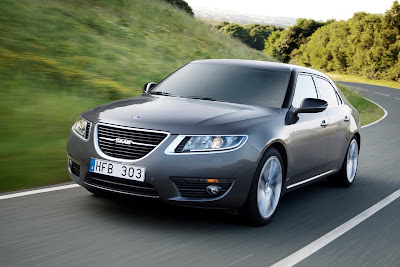
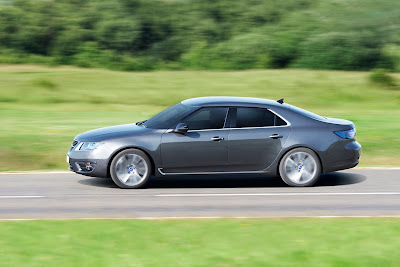
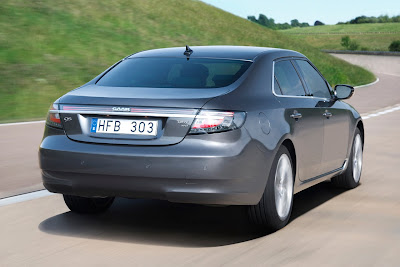
Saab 9-5 Sedan, 2010

Saab 9-5 Sedan 2010


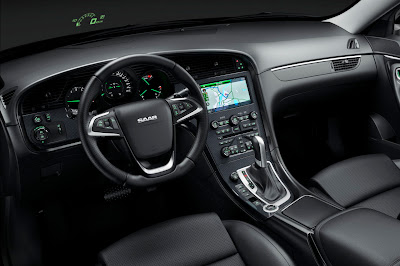
The array of high-tech features on offer includes: an aircraft-like head-up information display (Pilot HUD); adaptive lighting (Bi-Xenon Smart Beam); adaptive cruise control; Saab DriveSense adaptive chassis with real-time damping control; keyless entry and starting; tri-zone air conditioning; dynamic parking assistance and Saab XWD with a rear eLSD, the industry-leading all-wheel-drive system.

The all-turbo powertrain line-up starts at 1.6 liters and carries forward Saab's rightsizing engine strategy, which focuses on responsible performance through the development of highly efficient and relatively small four cylinder turbo engines. There is a choice of three fuels - gasoline, diesel and E85 bioethanol - and with diesel power, the new Saab 9-5 offers CO2 emissions as low as 139 g/km.
Saab 9-5 Sedan
The Scandinavian Design
Forward-looking design that doesn't ignore where it's coming from - that sums up the visual appeal of the all-new Saab 9-5 sedan. "We are giving a fresh, very modern expression to some of our classic brand design cues," says Simon Padian, Saab Brand Design Chief. "We have taken visual themes in our recent concept cars, such as the Aero X, which are inspired by Scandinavian design and our brand's aircraft heritage."

The face of the new 9-5 is defined by a deep grille flanked with curving, ice-block headlamp units. The entire glasshouse is presented as a 'wraparound' mono graphic, the disguised windshield and side pillars giving the cabin Saab's signature cockpit look. Squint slightly, and the proportions of the windshield and roof become reminiscent of the classic 900 model.

The new Saab 9-5's overall proportions stretch the traditional three-box sedan silhouette, while avoiding the fastback cliché of a four-door coupé look.

Driver-focused cabin
Inside the spacious cabin, simple forms define its architecture and echo the design purity of the exterior. Compared to its predecessor, legroom and shoulder width are increased both front and rear. The choice of materials, the fit and finish and the tactile quality of the controls all reflect the new Saab 9-5's premium appeal.

The driver-focused cockpit is traditional Saab, while its execution is all new. The deep center console sweeps up at a shallow angle around the driver into the main instrument display, which is topped by a neat ventilation zone. Deeply recessed main dials include a rolling 'altimeter' speed read-out, a reference to Saab's aviation heritage from the Aero X concept. Driver displays, including the optional head-up display (Pilot HUD) in the windshield, are predominantly illuminated in signature Saab green and have a crisp, floating appearance The car's ignition, now a start/stop button, remains between the front seats, next to the gear shift.

The Rear passengers can access their own audio or watch a DVD. The rear seat entertainment unit in the back of the center console accommodates audio controls and fold-our viewing screens are installed in the front seat-backs. Wired and wireless headphones are provided for listening and viewing. The rear seat entertainment unit also includes twin air vents and an independent temperature control for the rear cabin, in addition to the dual zone air conditioning up front.

The clean, sculpted shape embraces the purity of Scandinavian design and its dramatic wraparound window graphic echoes Saab's aviation heritage. With frontal styling inspired by the award-winning Saab Aero X Concept car and a muscular, low-slung stance, the new Saab 9-5 heralds the introduction of a bold, more expressive design language.

On the road
An array of chassis technologies is focused on delivering a sporty, rewarding driving experience that belies the Saab 9-5's size. Saab XWD, the industry-leading all-wheel-drive system already available on the Saab 9-3, is offered with the 2.0-liter gasoline, BioPower and 2.8V6 turbo engines.. Available throughout the range is adaptive chassis control with driver settings selection through Saab DriveSense, Bi-Xenon Smart Beam adaptive lighting and intelligent cruise control. . Two different suspension layouts are factory-fitted according to engine power and both are available with a sport chassis setting.

Saab has some 30 years' experience in turbocharging engines and the all-turbo powertrain line-up in the new Saab 9-5 further develops its rightsizing engine strategy. At launch, the four cylinder choice comprises a 160 hp, 2.0-liter turbo diesel with CO2 emissions of just 139 gm/km and a 2.0-liter gasoline turbo developing 220 hp. A top-of-the-line 2.8V6 turbo, generating 300 hp and 400 Nm of torque, is offered exclusively with Saab XWD.


Wednesday, March 3, 2010

Saab Aero X Concept

Saab Aero X Concept


Inspired by Saab's aviation heritage and Scandinavian roots
  • Previews more progressive design language
  • Innovative opening canopy eliminates doors and windshield pillars
  • "Green Power" from 400 hp BioPower engine using 100 percent ethanol fuel
  • All-wheel drive, carbon fiber bodywork
The Saab Aero X concept harnesses the power of Saab's aviation and Scandinavian roots to make a unique statement in performance car design. Conceived as a study to explore future design directions, its innovative features preview the development of an enhanced design language that will inspire future Saab products.

As one would expect from Saab, this dynamic two-seater sports coupe breaks with automotive design convention both outside and inside.

First, there are no doors... or windshield pillars. That's because the Saab Aero X adopts a cockpit canopy, just as you would see on a jet aircraft. It offers the Aero X pilot full 180 degree vision, and also facilitates entry and exit from its low-slung cabin.


Thrust for the all-wheel-drive Saab Aero X also comes from a powerplant with a difference. The 400-hp, twin-turbo, BioPower V6 engine is fueled entirely by ethanol, a sustainable energy source that is kinder to the environment by cutting fossil CO2 emissions. The "green power" of this advanced engine gives new meaning to the phrase "performance with responsibility."

Inside, the Saab Aero X's cockpit also adds a new dimension to clean Scandinavian interior design by completely eliminating conventional dials and buttons. Instead, Saab has applied techniques derived from Swedish glass and precision instrument making, displaying data on glass-like acrylic 'clear zones' in graphic 3-D images.
Saab Aero X Concept

With weight-saving carbon fiber bodywork, a lightweight powertrain, electronically controlled suspension and all-wheel drive, the Saab Aero X is an exciting driver's car that promises a level of performance to match its looks. Computer simulations anticipate zero to 60mph/100 kph in just 4.9 seconds and a top speed of 155 mph/250 kph (limited).

Despite being so tightly driver-focused, the Aero X still offers surprising practicality, again, a quality you would expect to find in all Saab designs. That dramatically sculpted tail conceals a useful twin storage facility, with a conventional hatch opening and sliding drawer underneath.


"The concept shows the exciting possibilities that are open to us as we evolve a more progressive design language for the brand," says Jan Åke Jonsson, Saab Automobile's Managing Director. "Our designers, engineers and marketers in Sweden are ideally placed to nurture and communicate the unique DNA of the Saab brand. Their work will ensure that future product proposals express core qualities, such as progressive design, sporty performance and emotional functionality, in a way that is specific to Saab."

The Saab Aero X is the latest in a series of concepts from Saab, each accentuating different brand qualities. These include the 'four-dimensional' 9X (IAA Frankfurt 2001), the 9-3X Cross-over Coupe (Detroit 2002) and the 9-3 Sport Hatch (IAA Frankfurt 2003).