Showing posts with label 2010. Show all posts

Thursday, February 17, 2011

Acura MDX, 2010

Acura MDX, 2010


The award-winning Acura MDX luxury SUV sets even higher standards in 2010 for styling, performance, technology and safety. For 2010, the Acura MDX features a fresh new exterior look, revised powertrain that includes a new 6-speed automatic, chassis refinements, more comfort, and improved technology along with the introduction of an all-new Advance Package - making the class leader even better.

Visually, the 7-passenger 2010 Acura MDX receives more aggressive styling in the form of new front and rear bodywork, a bold new front grille and numerous new trim enhancements. Under the hood, the Acura MDX receives a more refined 3.7L V-6 engine that teams with an all-new 6-speed automatic transmission for better performance and improved fuel efficiency. Inside, the Acura MDX receives a host of new features and technologies that make it even more luxurious.

Ride and handling have been enhanced as a result of a revised power steering system, stiffer rear trailing arm mounting, body rigidity improvements and reduced overall NVH. Thanks to Acura's exclusive Super Handling All-Wheel Drive™ (SH-AWD®) system, the Acura MDX's handling provides confident on- and off-road handling in addition to excellent foul weather performance.

To expand the dynamic capabilities for 2010 MDX, a new Advance package, with a revised Active Damper System and larger 19-inch wheels and tires, further enhances handling while retaining the comfortable, quiet and controlled ride quality expected of a luxury vehicle.

The 2010 Acura MDX exterior gets a fresh new look as a result of Acura's signature design front grille, a new front fascia, revised hood, new side sills, a new rear fascia matched with rolled edge polished stainless-steel exhaust finishers, revised taillights with brighter LED lights, many new trim pieces and available 19-inch diameter 7-spoke aluminum-alloy wheels.

Inside, the 2010 MDX benefits from the expanded use of Milano leather, a new thicker sport steering wheel with racing-inspired paddle shifters, new gauges, easier to understand button placement for center stack functions, available ventilated front seats and upgraded interior trim. In addition, a host of new technology is available including AcuraLink Real-Time Weather™ and Traffic Rerouting™. Other available features include a new full VGA 8-inch navigation screen, a new rear view camera with three unique view choices, upgraded rear entertainment system, an updated audio system with a dedicated 15 GB hard disk drive (HDD) and USB port connectivity, even more LED lighting - and the list goes on.

Powertrain
For 2010 the Acura MDX receives a new 3.7-liter VTEC® V-6. The engine continues Acura's longstanding mission to provide V-8 level horsepower and torque while retaining the size and fuel efficiency of a V-6. Based on the previous Acura MDX's powerplant, the newly refined 3.7L V-6 develops 300 horsepower and 270 lb-ft of torque to provide immediate throttle response, outstanding low- and mid-range torque and excellent high-rpm power. 
 

Tuesday, February 8, 2011

Lamborghini Murcielago LP670-4 SuperVeloce, 2010

Lamborghini Murcielago LP670-4 SuperVeloce, 2010


Technical data - Lamborghini Murciélago LP670-4 SuperVeloce
    * Frame: High strength tubular steel structure with carbon fiber components
    * Bodywork: In carbon fiber, except roof and door external panels (steel)
    * Steering
          o Type: Mechanical (rack and pinion) power-assisted
          o Right-hand turning circle: 12.55 m (41.17 ft)
    * Wheels and tires
          o Front: 245/35 ZR 18"
          o Rear: 335/30 ZR 18"
    * Engine
          o Type: 12 cylinders at 60°
          o Bore and stroke: 88mm x 89 mm (3.46 in x 3.50 in)
          o Displacement: 6496 cc. (396.41 in³)
          o Compression ratio: (11 ± 0.2):1
          o Maximum power: 670 hp (493 kW) at 8000 rpm
          o Maximum torque: 660 Nm (487 lb-ft)at 6500 rpm
          o Engine position in vehicle: Longitudinal central-rear
          o Cylinder heads and engine block: Aluminum
          o Intake system: Variable geometry with 3 operating modes
    * Timing
          o 4 valves per cylinder, 4 overhead camshafts
          o Timing gear transmission: 2 chains
          o Continuous timing variator (int. and ex.): Electronically controlled
    * Ignition system
          o Static type ignition system with individual coils (one for each spark plug).
          o Firing sequence: 1-7-4-10-2-8-6-12-3-9-5-11
    * Fuel system/injection
          o Lamborghini LIE electronic engine control unit, multipoint, sequential timed, DRIVE BY WIRE
          o Lubrication system
          o Type: Dry sump
          o Recovery pumps: 2 gear pumps
          o Delivery pump (high pressure): 1 gear pump
    * Cooling system
          o Type: Liquid cooled, with pressurized circuit
    * Transmission
          o Type of transmission: Permanent all-wheel drive with Viscous Traction system
          o Gearbox: 6-speed e-gear
          o Clutch: Dry single disc
          o Clutch disc diameter: 272 mm (10.7 in)
    * Transmission ratios
          o Traction Control System: T.C.S.
          o Gearbox - E-Gear & Manual
          o 1st: 1:3.091
          o 2nd: 1:2.105
          o 3rd: 1:1.565
          o 4th: 1:1.241
          o 5th: 1:1.065
          o 6th: 1:0.939
          o Reverse: 1:2.692
    * Brakes
          o 4 self-ventilated rotors with pedal control, hydraulic transmission with dual independent circuits, one for each axle with vacuum servo.
          o ABS antilock device + DRP function
          o Carbo ceramic brakes (CCB)
          o Handbrake: Mechanical, acting on rear wheels
          o Front rotor: Ø 380 x 38 mm (Ø 14.96 in x 1.5 in)
          o Front caliper cylinders: n.6 (32-36-38 mm) (1.26 in -1.42 in-1.5 in)
          o Rear rotor: Ø 380 x 38 mm (Ø 14.96 in x 1.5 in)
          o Rear caliper cylinders: n.6 (32-36-38 mm) (1.26 in -1.42 in-1.5 in)
    * Suspension
          o 4-wheel independent articulated quadrilateral system. Hydraulic shock absorbers and coaxial coil springs. Suspension with dual front and rear struts, anti-roll, anti-dive and anti-squat bar.
    * Dimensions
          o Wheelbase: 2665 mm (104.92 in)
          o Total length: 4705 mm (185.23 in)
          o Total width: 2058 mm (81.02 in)
          o Total height: 1135 mm (44.69 in)
          o Dry weight: 1565 Kg (3450.2 lb)
          o Front track width: 1635 mm (64.37 in)
          o Rear track width: 1695 mm (66.73 in)
          o Front overhang: 1090 mm (42.91 in)
          o Rear overhang: 950 mm (37.40 in)
          o Maximum overall width with external rear-view mirrors: 2240mm (88.19 in)
          o Weight distribution front/rear: 42% - 58%
    * Liquid capacities
          o Fuel tank: 100 Liters (26.4 gal)
          o Engine oil: 12 Liters (3.17 gal)
          o Gearbox oil: 3,5 Liters (0.92 gal)
          o Front differential oil: 1 Liter (0.26 gal)
          o Rear differential oil: 2,5 Liters (0.66 gal)
          o Cooling circuit: 15 Liters (3.96 gal)
    * Performance
          o Top speed with small spoiler: 342 km/h (212.5 mph)
          o Top speed with big wing: 337 km/h (209,4 mph)
          o Acceleration 0-100km/h: 3.2 s
    * Fuel Consumption (according with DIR 1999/100/CE)
          o City: 32 L/100km
          o Highway: 13.7 L/100
          o Combined: 20.6 L/100
          o CO2 Emission: 480 g/km
    * Fuel Consumption USA (according with US EPA guidelines)
          o Manual
                + City cycle: 8 mpg
                + Highway cycle: 13 mpg
                + Combined: 10 mpg
          o E-Gear
                + City cycle: 9 mpg
                + Highway cycle: 14 mpg
                + Combined: 11 mpg

Lamborghini Murcielago LP650-4 Roadster, 2010

Lamborghini Murcielago LP650-4 Roadster, 2010


The automobile Lamborghini has released the first photographs of a limited edition Lamborghini Murciélago LP650-4 Roadster.
The Roadster version of the Murciélago will offer an uprated 6.5 litre V12 engine that produces 650 hp (478 kW) along with permanent four-wheel drive: hence the model's LP 650-4 moniker.
With 660 Nm of torque, top performance is at 0-100km/h (0-62mph) in 3.4 seconds. The top speed is around 330 Km/h (205mph).

The special edition model will be produced in a limited volume (50 units only), with a Grigio Telesto exterior that combines grey bodywork with a special bright orange Arancio LP 650-4 featured on the front spoiler and sills. The LP 650-4 logo applied to the car's exterior is recognition of the car's increased power. The car features orange brake calipers and a transparent V12-engine cover, which shows off the V12 engine behind the driver.

The interior features echo the car's striking grey-and-orange exterior: besides the orange touches, there is an asymmetric dash design, with black Alcantara Nera on the driver's side, including door panel and central tunnel, and black leather Nero Perseus on the passenger's side.

The increased power of the Murciélago engine, from 640 to 650 hp, will be unique to the Lamborghini Murciélago LP650-4 Roadster: it demonstrates even further the developments that Lamborghini is able to offer from a current engine, and creates the exclusive characteristic of the Lamborghini Murciélago LP650-4 Roadster.

Lamborghini Gallardo LP550-2, 2010

Lamborghini Gallardo LP550-2, 2010


Automobili Lamborghini now presents a model in his honour and bearing his name - the Lamborghini Gallardo LP550-2 Valentino Balboni.
The latest version of the Gallardo, Lamborghini's most successful model of all time - overall, more than 9,000 units of the model range have already been produced - boasts not only its own distinctive design and exclusive equipment, but its technology is unique too, as indicated by the model badge: the 550 stands for the power output in hp and the 2 is for rear wheel drive.

For several decades, Valentino Balboni has had a distinct influence on the character of the super sports car bearing the sign of the bull. With his fine-tuning and testing work, he has helped to shape many automotive legends, from the Lamborghini Miura of the 60s through to the current Lamborghini Gallardo and Lamborghini Murciélago models. Balboni was hired in 1967 by company founder Ferruccio Lamborghini himself. From early on, it was evident that the young Balboni had a special feel for cars, that most sensitive of all instincts that connects to the 'life blood' of an automobile and defines the soul of a test driver.

Limited to 250 units
The special exclusivity of the Lamborghini Gallardo LP550-2 Valentino Balboni is guaranteed - it is limited to 250 units.

The light-footed yet extremely safe
With this latest version of the Gallardo, Lamborghini is honouring its long-standing test driver in a very special way. The Lamborghini Gallardo LP550-2 Valentino Balboni was conceived in line with his own thinking, and it meets many customers' requests for a model with a unique character, which offers a very special kind of active driving fun. The Balboni model is the only current Lamborghini that delivers its power to the road via its rear wheels alone.

The rear wheel drive has a special appeal to those sports car drivers who enjoy a particular driving style. Thanks to the eminently powerful V10 driveline, controlled oversteer is no problem - naturally always to the extent defined by the driver - because refined road manners and perfectly tuned assistance systems mean that the Lamborghini Gallardo LP550-2 Valentino Balboni is an exceptionally safe sports car to drive.

Driving fun with unique character
In order to shape this unique character that combines driving fun and safety, the engineers at Sant'Agata Bolognese have incorporated extensive modifications into the LP550-2 Valentino Balboni. It was not simply a question of moving the transmission to the rear axle, the vehicle had to be adjusted and tuned in every element of its driving dynamics. This includes springs, dampers, stabilisers and even the tyres. The aerodynamics were also adjusted to take account of the change to the power flow.

The rear axle differential, with a 45 percent limited slip, was also redeveloped, as was the calibration of the e-gear transmission. One significant point was the adjustments made to the ESP system. While the standard program is focused on high stability, the CORSA program permits greater drift angles, thus enabling drivers to enjoy the dynamics of the LP550-2 to their full extent.

The outstanding performance is guaranteed
The adjustments have also been made to the very heart of the Lamborghini Gallardo, the 5.2 litre ten-cylinder: the perfect synthesis of hi-revving pleasure, pulling power, a constantly exuberant temperament and a powerful symphony played in all keys. In the Valentino Balboni, the compact and lightweight power unit generates 405 kW (550 hp). At a dry weight of only 1,380 kilograms, this guarantees outstanding performance: the LP550-2 is catapulted from 0 to 100 km/h (0-62mph) in a breathtaking 3.9 seconds, while the top speed of 320 km/h (199 mph) guarantees its place among the ultimate in super sports cars.

The powerful elegance in its distinctive design
The Valentino Balboni is not only unique in terms of its technology: its design and equipment reinforce its exclusivity. Its classic sporting character is emphasised by a colour strip in white and gold running from the front panel over the roof and parts of the engine cover all the way to the rear spoiler, with inspiration from the classic sports cars from the '70s. This colour treatment underscores the powerful elegance of the Lamborghini Gallardo and emphasises the unique Lamborghini design DNA. The Special Edition is available in eight colours, from Bianco Monocerus through to Verde Ithaca, or Arancio Borealis to Nero Noctis. The Scorpius wheels retain their dark grey finish, while the brake callipers come in black, orange or yellow, depending on the exterior paint finish.


The Classic sporting look for the interior.
The characteristic colour combination is repeated in the interior. The basic colour of the full leather upholstery is black. Both seats, however, feature the colour strip in white. The centre console is completely upholstered in Polar white leather to create a powerful accent. A badge below the left side window bears the signature of Valentino Balboni and the production number of the car.
The exclusivity of the Valentino Balboni is augmented further by its extensive equipment. Alongside several new leather features in the interior, there is also the transparent engine cover, the rear view camera, the navigation system with Bluetooth and the lifting system for the front axle that makes it easier to drive over obstacles. In addition to the extensive standard equipment, a list of further options is available including e-gear transmission and carbon ceramic brakes.

Friday, January 7, 2011

Hyundai i-flow Concept, 2010

Hyundai i-flow Concept, 2010


 Making its global debut at the 2010 Geneva Motor Show, the Hyundai i-flow Concept car carries forward the company's evocative new form language, 'fluidic sculpture'. The flowing, elegant lines not only create a bionic, futuristic shape, but also contribute to exceptional aerodynamics, helping to reduce the car's CO2 output to just 85g/km and fuel consumption to only 3l/100km.

Hyundai's first diesel hybrid powertrain is also a key factor in delivering such an environmentally-conscious return, as is the application of next-generation materials and technologies developed in cooperation with leading chemical company BASF.

Previewing a future D-segment contender
With an overall length of 4.780mm and a 2.800mm wheelbase, the Hyundai i-flow Concept brings new ideas and a pioneering form to the traditional European D-segment. The dramatically-sculpted forms of the interior and exterior make for a striking sports sedan, and its width and height (1.850mm and 1.420mm respectively) give it an athletic stance.

The name i-flow reflects the exceptionally aerodynamic shape and the flowing lines of the concept car's eye-catching styling, and retains the 'i' prefix of Hyundai's established alphanumeric nomenclature for Europe. In 2011 Hyundai will bring into production a new challenger in the segment, drawing on the Hyundai i-flow Concept's sleek styling and innovative technology.

Inside: minimum weight, maximum space and a bionic feel
The interior of Hyundai i-flow Concept redefines the perception of space in a sedan bodystyle. Fundamental elements, such as the seats and center console, were crafted for minimal weight and volume using cutting-edge materials from BASF - one of the world's leading automotive suppliers.

The seats, for example, were developed in conjunction with BASF using advanced stress analysis, which highlighted the unnecessary mass areas and pointed towards an optimized lightweight seat structure. 'Steron', a BASF material, gives the seats a highly-resilient quality, excellent breathability and a high-tech touch.

The upper dashboard, meanwhile, is treated with Elastoskin, a sprayed skin from BASF for a sophisticated, shimmering finish.
This technical, meticulous approach combines with an abundance of natural materials to engender a bionic feel in the cabin, further symbolized by the green color tones and the leaf-like shadows projected from the roof's semi-transparent dye-sensitized solar cells.

The cockpit's main interface centers around an expansive, contoured screen, which recognizes not only touch but also gestural inputs along its fascia-wide display. The fluidic forms of the exterior are echoed in the Hyundai i-flow Concept's cabin, where continuous lines sweep from the dashboard, through the doors to the open storage area at the rear.

Energy Conservation
BASF and Hyundai R&D engineers have developed thermal engine encapsulation, which ensures that the engine reaches optimum operating temperature more quickly, by retaining heat when the car is at idle. Where a non-insulated engine would take three hours to drop to 40°C, the Hyundai i-flow Concept will stay above that temperature for 14 hours. This translates into fuel savings and emissions cuts of 5 per cent during summer and up to 9 per cent during winter.

Energy Harvesting
Another pioneering technique introduced in collaboration with BASF is thermo-electric waste heat recovery. This process equates to further reductions in fuel consumption, 5% at highest driving. In fact, up to half of the electrical energy consumed by Hyundai i-flow Concept at 80kph - 250 watts - can be recovered through the work of a thermo-electric generator. Harvested energy from hot exhaust gases is recaptured by this generator which is fitted into the exhaust manifold. The thermal electric generator then converts the wasted heat into useful electrical energy to help power auxiliary systems.

Liquid Metal, a coating with the appearance of a glossy skin made of liquid metal, has been developed by BASF Coatings. Special effect pigments in this eco-friendly waterborne coating system let the surface appear as polished metal with targeted mirror like reflections - this gives a liquid skin appearance to the car's exterior and increases the tension of the surface in the same time. The high color saturation on the Hyundai i-flow Concept adds an energizing charisma to the Hyundai concept car. The typical high contrast between highlight and flop underlines the sculptural impact of the Hyundai i-flow Concept.

Sunday, December 26, 2010

Alfa Romeo 159 1750 TBi, 2010

Alfa Romeo 159 1750 TBi, 2010


The new 159 is designed to express a sporting yet seductive personality and boasts road holding and performance that set new standards for this class of car. Two new engines in particular (a 200 HP, 1750 cc turbocharged petrol engine and a 170 HP 2.0 JTDM diesel) place the Alfa Romeo 159, in the power range that accounts for over half of Alfa Romeo sales.

Under their fascinating and highly personal exterior, all Alfa Romeos a choice of superb engines, all packed with the latest technology and bursting with performance. Alfa Romeo engines are the perfect embodiment of the sporting soul that has always set the marque apart from the competition. The Alfa Romeo 159 is certainly no exception.

The new 1750 cc turbo petrol engine (manufactured by FPT - Fiat Powertrain Technologies) comes combined with a six speed manual gearbox and boasts advanced ignition control solutions including direct fuel injection, two continuously variable valve timing units, a turbocharger and a revolutionary scavenging control system. The resulting performance is comparable to - or better than - that of many 3 litre engines while still delivering fuel consumption typical of a compact four cylinder unit.

The force behind the development of any Alfa Romeo engine is the company's determination to use technology to enhance driving pleasure. This certainly applies to the development of the new, Euro 5, "1750 Turbo Benzina 200 CV" unit destined immediately for the Alfa Romeo 159 and later on for the Alfa Romeo Brera, Spider and 159 Sportwagon.

The engine takes the Alfa Romeo 159, with its refined Italian styling and typical sporting elegance to an impressive top speed of 235 kph and accelerates it from 0 to 100 kph in just 7.7 seconds. The 200 HP Alfa Romeo 159 1750 TBi is therefore a true representative of Alfa's exclusive motoring lifestyle. Far from being a mere 'means of transport', the new 159 is a real driver's car. It delivers genuine sports performance and muscular acceleration thanks to generous torque and smooth response even at low revs and the extended power band of a modern, advanced petrol engine that minimises the need for you to 'work' the gearbox. The engine sound too is inspiring without ever becoming tiresome.

Alfa Romeo 2uettottanta Concept, 2010

Alfa Romeo 2uettottanta Concept, 2010


To mark its 80th anniversary, Pininfarina proposes an "open" Alfa Romeo 2uettottanta Concept that is exciting and a delight to drive. For those who still like to dream in a car. For those looking for a mixture of vanity, entertainment, and the pleasure of life in the open air. For those who love icons as the greatest expression of the age we live in. For those who want their cars to be an uncommon sensory experience in terms of both style and driving, without being obsessed by performance. For those who want to be excited by a dynamic, sporty car that transmits the exclusiveness and refinement typical of an Alfa Romeo spider designed by Pininfarina.

2uettottanta: a name that evokes the legendary Duetto, but also the years of activity at Pininfarina, which launches the celebrations for its 80th anniversary with this concept car. And it has decided to do so with a type of car that is by definition, the work of Pininfarina: an Alfa Romeo spider. A very Italian product, which has become an export brand, representing the inexhaustible talent that the whole world associates with Italy.

The Alfa Romeo 2uettottanta Concept reflects Pininfarina's determination to look to the future with optimism following tradition, restating its excellence in design and its acknowledged capacity for aesthetic and technological innovation. It is a concept that represents an innovative approach, projected into the third millennium, to a topic that is firmly rooted in Pininfarina history, the 2-seater spider. And like the best Alfa Romeo sports cars to come from Pininfarina's pencil, the Alfa Romeo 2uettottanta Concept exalts the driving experience and concentrates on the excitement of being at the wheel of an open car with a great aesthetic personality. It is a car that can make people dream and excites even after many years. The icon of a lifestyle that harks back to a lively, tumultuous period. Like the Duetto of the Sixties, which helped to establish a trend based on the themes of rebellion and escape, thanks to the film "The Graduate".
Alfa Romeo 2uettottanta Concept

The Alfa Romeo 2uettottanta Concept is also a tribute to Alfa Romeo, which celebrates its centenary in 2010: the alliance between Alfa Romeo and Pininfarina is one of the most significant and durable in the history of the car, one of men and of passion, of design and cutting-edge technical solutions, which has generated an inestimable number of good-looking, innovative cars with plenty of temperament. With a predilection for sports cars and convertibles. The aim is to replicate all this with the Alfa Romeo 2uettottanta Concept. So a clean, elegant line was chosen for this "simple 2-seater", which is proposed with a 1750 cc turbo engine positioned longitudinally, an obvious reference to the "1750 Veloce" of 1968, one of the many versions derived from the famous "Osso di Seppia" (Cuttlefish). With its red bodywork, inspired by the typical Alfa Romeo paintwork, the 2uettottanta is 1797 mm wide, 4212.6 mm long, 1280 mm high and has a wheelbase of 2500 mm.

The pleasure of driving and feeling in harmony with nature is transformed into light, sleek, refined volumes, and shapes that seem to slip through the air easily. This generates the theme of this concept: the expression of a single volume, which is some way from the ground and suspended. The Alfa Romeo 2uettottanta Concept almost seems to lift up from the ground "going further". It is an optical effect achieved thanks to a line that crosses the whole car horizontally. An uninterrupted sign applied to dynamic, sporty proportions - typical of Alfa Romeo spiders - accentuated by the configuration of the passenger compartment, which is shifted significantly to the rear. The force of the design lies in its exaltation of simplicity, which does not need to show its muscles but concentrates purely on agility and harmony.

The front end of the Alfa Romeo 2uettottanta Concept underlines its true Alfa Romeo character. The design is simple, with a central line that runs smoothly along the nose of the car, while the execution of the surfaces is more sophisticated. At the centre, in full view, and anything but a purely decorative element, is the Alfa Romeo shield, which seems to emerge from the heart of the car and to stretch outwards, in Pininfarina's futuristic, three-dimensional approach. The shield is made of aluminium and incorporates floating horizontal flaps. On either side are the two triangular lateral air intakes. The two elements impressed on the imposing bonnet create a natural link between the logo and the large windscreen, which has been designed as a ring in hand-beaten aluminium that emerges from the body of the car without interrupting its flow. The front headlights, which adopt the latest LED technologies, are embedded under the line that gives the whole car its character. A strip of carbon in the lower part of the front acts as an air splitter, channelling the air to the rear end of the car.

The side view of the car, where the theme of the single volume is repeated, highlights the flowing line of the whole, with the shapes merging naturally. The horizontal line "cut" into the sides gives a sense of great dynamism; it starts from the front wheelarch and extends back to the rear wheel. Like an athlete, for a car, being slim also means achieving aerodynamic efficiency. Pininfarina has always strived for natural shapes that can convey efficiency and respect of the environment, an approach confirmed by its great commitment to the theme of eco-sustainable mobility. The Alfa Romeo 2uettottanta Concept is in perfect harmony with nature, becoming the formal expression of a response to the needs of our day: it is an arrow that flies through the wind almost without encountering resistance.

Smooth, essential, soft surfaces even at the rear, which echoes the front, albeit with slightly more emphasis on the muscles. The design combines stylistic simplicity with a strong character in the volumes and proportions, with details designed to underline the car's dynamic, light personality. The two bumps seem to emerge from the volume, becoming floating wings that create the roll-over bars behind the seats. At either end, these bars generate an appendix designed to hold the seat belts. Even at the rear the light clusters are slender and embedded under the line that defines the whole section.

Great attention went into the design of the interior. The result is a spacious, comfortable passenger compartment, conceived with light, dynamic volumes, which envelop the occupants in a strong, reassuring embrace. The shapes are sewn into the leather, incorporating the touch controls: in its functions, the Alfa Romeo 2uettottanta Concept is faithful to its vocation as a car designed to be a delight to drive. The facia extends fluidly to the sides merging into the doorway as the natural continuation of the volume of the car, thus creating a perfect symbiosis between exterior and interior. The dashboard has a driver-oriented configuration with an innovative approach to the classical circular Alfa Romeo "tubes" that contain the instruments. The tunnel contains the Alfa DNA gear selector in an ergonomic position; this varies the set-up of the car in three modes, Dynamic, Normal and All Weather, adapting the behaviour of the various systems on the vehicle (engine, transmission, suspension, steering, brakes, etc.) to the demands of the driver and the different driving conditions. The tunnel runs through the passenger compartment and it gives structure to the chassis, revealing the carbon elements: the choice of this material reflects Pininfarina's constant research into alternative materials that can make vehicles lighter, reducing consumption and emissions. Another strong element of the interior is the steering wheel, which is a modern interpretation of the Duetto's perforated three-spoke wheel, with the addition of a shift paddle for sequential control of the dual-clutch gearbox. An enjoyable drive and comfort are also guaranteed by the anatomical sporty seats. All the interior of the car "floats": the ventilation ducts are positioned between the passenger compartment and the hull.

The size and design of the tyres, which were created specifically for the Alfa Romeo 2uettottanta Concept in collaboration with Dunlop, accentuate the impression of strong character and force given by the car. The tyres are of the low profile type, right on the extreme edges of the plane view: designed by Pininfarina to incorporate the innovative technologies developed by Dunlop, their graphics reflect those of the car. Their aerodynamic shape and very smooth lateral profile, guarantee better roadholding and less resistance to air, thus reducing consumption. The rims are treated in aluminium in harmony with the rest of the car, and are a free interpretation of the classic five-circle Alfa Romeo pattern, revealing the high performance carbo-ceramic Alfa Romeo brakes by Brembo.

The Alfa Romeo 2uettottanta Concept is not a pure styling exercise, but also a project and research: the goal is to grasp the spirit of the spider in the configuration, the proportions and the conception of the car as well as in its stylistic imprint. This working method is part of Pininfarina's genes. For this project, the Pininfarina creative team were given carte blanche to express the values inherent in the Alfa spider "by Pininfarina", the values that are deemed to have made the Giulietta Spider or the Duetto all-time classics. To achieve this result, the car was given a particular set-up, with a low centre of gravity and a passenger compartment that is very exposed so as not to isolate the occupants from the surrounding environment. The result is to bring the road "nearer" to the eyes of the driver and to increase the sense of dynamism even at low speed.

What is the 2uettottanta effect? Desire. Whoever sees it "must" possess it, drive it, enjoy it. Because the 2uettottanta is not an unattainable dream. Nor does the 2uettottanta only want to impress at first glance, but to achieve a beauty that does not strive solely for immediate confirmation, but gradually reveals all its values and transfers them to the future, making the style eternal. As it did in the case of the Duetto, which continues to be celebrated as an icon of design after more than 40 years.

Thursday, November 18, 2010

Brabus E V12 Coupe, 2010

Brabus E V12 Coupe, 2010


At the Geneva Motor Show 2010 the Brabus E V12 Coupe celebrates its world debut as the world's fastest Gran Tourismo. Based on the new Mercedes E-Class Coupe, Brabus builds a luxurious 2+2-seater in small-series production. It is powered by a Brabus SV12 R Biturbo 800 twelve-cylinder displacement engine that produces 800 hp (788 bhp) / 588 kW of power and a peak torque of 1,420 Nm (1,047 lb-ft). Brabus accepted by the German Federal Vehicle Registration Agency (Kraftfahrtbundesamt) as an automobile manufacturer, offers this high-performance automobile capable of reaching speeds in excess of 370 km/h (230 mph) starting at 478,000 Euros MSRP.

Like the fourth-generation Brabus E V12 sedan the new E V12 Coupe is powered by a Brabus SV12 R Biturbo 800 displacement engine. Drawing upon decades of experience in developing and building high-performance vehicles the twelve-cylinder engine was fitted into the engine bay of the two-door E-Class.

The basis for this engine is the twelve-cylinder twin-turbo engine from the latest Mercedes 600 models. Displacement of the engine is increased from 5.5 to 6.3 liters (336 to 384 cu. in.) with the help of a special crankshaft, larger cylinder bore and correspondingly larger pistons. Both three-valve cylinder heads are optimized for mixture flow, and fitted with sport camshafts.

Underneath the custom-made hood with integrated carbon-fiber RAM airbox is space for a completely newly developed air intake system. This twin-turbo system was designed from the ground up for the new E V12 generation. It includes two custom high-performance headers with integrated turbochargers and four water-to-air intercoolers. The stainless-steel high-performance exhaust system with free-flow metal catalysts was also custom-tailored for the confined space under the E-Class Coupe.

In addition, the Brabus engine specialists have developed a precision engine management system that controls injection, ignition and driving dynamics systems. The result is an optimal combination of impressive power yield and eco-friendly emissions that meet strict EURO IV exhaust limits.

The Brabus SV12 R Biturbo 800 engine is lubricated with high-tech motor oil from technology partner ARAL. It produces a rated power output of 800 hp (788 bhp) / 588 kW at 5,500 rpm. The even more impressive peak torque of 1,420 Nm (1,047 lb-ft), available already at a low 2,100 rpm, is limited electronically to 1,100 Nm (811 lb-ft).

Power is transferred to the rear wheels via a reinforced five-speed automatic transmission and a Brabus high-performance limited-slip differential. The Brabus E V12 comes standard with state-of-the-art driving stability programs that can be deactivated at the push of a button.

Performance of the coupe is as exceptional as that of the four-door model: The Brabus E V12 Coupe sprints from 0 - 100 km/h (62 mph) in just 3.7 seconds, to 200 km/h (124 mph) in 9.9 seconds, and reaches 300 km/h (186 mph) after a mere 23.9 seconds. For street-legal use the top speed of the Gran Tourismo is limited electronically to 350 km/h (217 mph). Without the limiter the two-door twelve-cylinder car is capable of speeds in excess of 370 km/h (230 mph).

This extreme performance also places highest demands on the vehicle's aerodynamic properties. The Brabus designers went into the wind tunnel to develop a body conversion kit made from high-strength yet especially lightweight carbon fiber. The kit combines sporty design and aerodynamic efficiency to perfection.

The Brabus front was designed to reduce lift on the front axle and to provide all radiators of the V12 with an optimal supply of cooling air. Air outlets in the sides route the air quickly away from the heat exchangers. Another important design feature was to provide the front brakes with cooling air. Integrated LED daytime running lights further increase active safety.

A wider track means better directional stability at high speeds. Because of that Brabus has developed special carbon-fiber sport fenders with integrated air vents for the front axle. Special carbon-fiber rear fenders add 60 millimeters (2.4 in.) to the width of the coupe on the rear axle. The Brabus E V12 Coupe runs on especially wide wheels fitted with high-performance tires from Pirelli or YOKOHAMA. The 19-inch combination is perfect for the enormous top speed the car is capable of. The wheels are 9.5 inches and 10 inches wide and customers can choose from Brabus Monoblock designs VI, E, Q and S. Tires in size 265/30 ZR 19 are mounted on the front axle. Size 285/30 ZR 19 tires on the rear axle provide optimal traction.

Rocker panels with integrated illuminated Brabus logo and LED entrance lights route the air stream along the sides with minimum turbulence. They also lend the two-door car a longer, sleeker appearance.

The Brabus rear apron with carbon-fiber diffuser features a centrally mounted reflector and custom-tailored cutouts on either side for the Brabus quad sport exhaust system. The Brabus rear spoiler is essential for well-balanced aerodynamics at high speed.

To make the Brabus E V12 Coupe not only a superior road warrior but upon request also an extremely sporty racer on the track the suspension was completely redesigned. The redesign includes special suspension components on front and rear axle that offer a wider range of individual suspension settings.

These measures are complemented by a Brabus coil-over suspension that features a multitude of selectable settings for bound and rebound. The shock absorbers on the front and rear axle feature ten selectable settings for bound and rebound. The ride height has an adjustment range of 35 millimeters (1.4 inches). Sport sway bars can further minimize body roll during fast cornering.

The Brabus high-performance brake system meets the toughest demands, on the road or on the track. The front axle features 12-piston aluminum fixed calipers and vented and grooved steel brake discs measuring 380 x 37 millimeters (15.0 x 1.5 inches). The rear axle stops on six-piston aluminum fixed calipers gripping discs measuring 360 x 28 millimeters (14.2 x 1.1 inches). The Brabus high-performance brake system incorporates all functions of the standard Brake Assist system of the Mercedes E-Class.

The interior combines sporty character with luxurious ambiance. An ergonomically shaped sport steering wheel is part of the equipment list of the Brabus E V12 Coupe as are sport seats upholstered with the finest leather. The seats provide excellent seating comfort and lateral support.

Genuine carbon-fiber trim on dashboard, center console and doors adds further sporty highlights.

Sunday, October 31, 2010

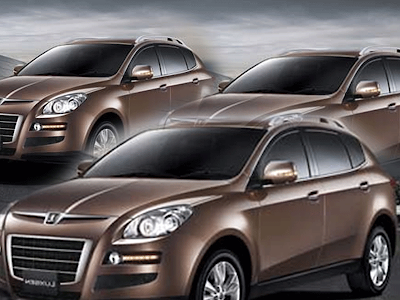
2010 LUXGEN Cars New Luxgen7 SUV 2.2-litre Turbocharged

2010 Luxgen7 SUV is model that’s on sale in its home market and if it proves successful, could eventually make its way to the UK and other European countries. It is Taiwan’s first passenger automobile brand Luxgen. The Taiwanese auto brand, Luxgen, has lifted off the covers from its second model, the very new Luxgen7 SUV that according to the maker, “represents a milestone in vehicle design.” The company’s first model was called the LUXGEN7 MPV and received tremendous response in sales and became the first automobile ever to win the prestigious Taiwan Excellence Award. Now with Luxgen7 SUV, the company seems to be scripting another success story.
2010 LUXGEN Cars New Luxgen7 SUV
The 2010 Luxgen7 SUV represents a milestone in vehicle design. The distinctive wing shaped chrome nose trim and cascading grille express both power and confidence and upward sweeping beltlines convey a sense of dynamics motion as well. Measuring at 4.8 meters long, 1.93 meters wide and 1.76 meters in height, the LUXGEN7 SUV is also among the largest in its segment while maintaining elegant and svelte proportions.
LUXGEN7 SUV is also the only one in its segment to feature the intelligent power actuated tailgate as standard equipment. Another exclusive feature in the car is the anti-theft sport seat. The company explains the working in the following statement: “When drivers press the button on the anti-theft seat for three seconds before locking the doors with the remote control, the anti-theft system will activate by sliding itself forward and leaning against the steering wheel to deny unauthorized access of the vehicle.”
The Luxgen7 SUV powered by a newly developed 2.2-litre turbocharged four-cylinder petrol engine producing 175HP at 6,000rpm and 28kgm of torque spanning from 2,500 to 4,000rpm. The petrol unit is coupled to an also new 5-speed automatic transmission equipped with manual shifting function and what Luxgen describes as “intelligent Transmission Control Module with 10 built-in operation modes.” The automatic transmission was developed by Japan’s Aisin.
The Luxgen7 SUV interior design uses the premium leather seat with airline first class style surrounding head restraints together with the available heating, ventilation, electronic and lumbar support adjustment functions to ensure utmost comfort anytime. In addition, the Hi-end Clarion audio system and JBL speakers provide premium sound quality and surreal vocal reproduction to music lovers.
In the interior, the luxury Luxgen7 SUV features Hi-end Clarion audio system with JBL speakers, GPS navigation, four advanced visual assistance systems including Eagle View and many more. In the security system, however, there is SRS airbags, ABS Antilock Braking System, BAS Braking assistance System and EBD Electronic Brake Distribution. The potential buyers have to shell out somewhere between US$25,831 to 35,386 to own a Luxgen7 SUV.
Inside the Luxgen7 SUV you will find premium leather seat available with heating, ventilation, electronic massage and lumbar support adjustment, as well as Hi-end Clarion audio system and JBL speakers. The safety features dual front SRS airbags, Antilock Braking System, Braking Assistance System, and Electronic Brake Distribution system. Furthermore, dual side protection airbags, dual side curtain airbags, Electronic Stability Control, and Traction Control System are also available options.
In addition, the SUV also gets an intelligent 3-mode 4WD system that can actively split engine torque between the front and rear axles based on the road condition and driver input. In Taiwan market, the Luxgen7 SUV is available in five trim levels at prices ranging from NTD 838,000 ($25,831 U.S.) to NTD 1,148,000 ($35,386 U.S.).

Friday, July 2, 2010

Honda announces the arrival of the 2010 Honda CR-V

image Honda CR-V2010 Honda CR-V Black Design Front Side

Honda Cars Philippines announced a new line up their SUV, the CR-V 2010. We want to give this new car to spin and if Honda's possible, we will give you a review soon. Official press release after the jump.

Honda Cars Philippines, Inc. (HCPI) formally announced the arrival of the CR-V 2010. Radiation decent styling, bold attitude and world-class performance, the new CR-V enables you to cross over into life, Äôs a different adventure. This is the ability to run well with a variety of lifestyles and remain with the demands of modern life. The 2010 CR-V is a manifestation of the good things life has to offer.

When the arrival of the new CR-V was first announced last December, a total of 200 customers have placed orders will only refer to the photographs being released and even without seeing the actual unit yet.

Heed the call for sustainable progress in the fast-paced era, the new CR-V allows you to move to urban areas with sophisticated new two-step front grille with a honeycomb design, fresh bumper and alloy wheel designs. new styling blend perfectly with the CR-V, Äôs a clear line and more-all premiums for the more refined finish and look more closely.

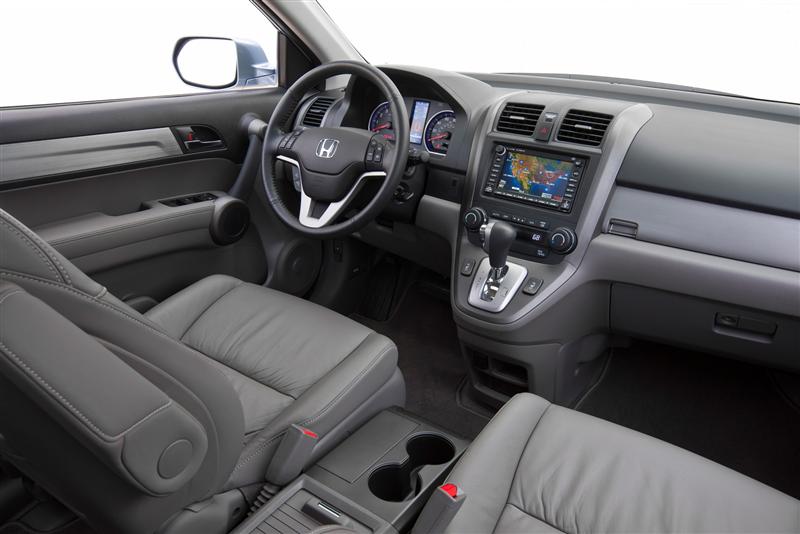
interior also presents an elegant atmosphere adds to the dual-tone black and silver color scheme, design of new cloth seats for the 2.0-liter variant and stylish black leather seats with gray accents-stitch for 2.4-liter model.

Experiencing a sedan-like comfort and performance improvements, security features and excellent fuel efficiency benefits of the CR-V 2010.

Committed to bringing new value in our products and services, adjusted for Honda CR-V, Äôs suspension system for better handling and comfort. Quieter drive can also be expected with additional seals and insulators applied to improve NVH (Noise, vibration and hardness) levels. These improvements make the CR-V is only your experience safer, more comfortable and enjoyable.

Having the safety of passengers as a priority, the CR-V still equipped with dual SRS airbags and side, with OPDS (Tenant Position Detection System), which intelligently detects weight, height, and position of the front passenger to identify whether to deploy airbags or no. Meanwhile, the body is designed with the G-CON technology that provides a unique impact-absorbing structures to reduce injury to the driver, passengers and even pedestrians. G-CON technology has been tried in the Honda, Äôs real world to test cars that facility will occur in the world, Äôs first indoor crash test facility omni-directional safety.

Every Honda has advanced technology that provides the spirit of driving with reduced environmental impact. The 2010 CR-V continues to generate 170 ps at 5800 rpm and maximum power of 2.4 p for the variant and 150 ps at 6200 rpm for 2.0 li variant with i-VTEC engine technology. With the advanced engine technology, the CR-V made a promising fuel economy and clean emissions that meet Euro 4 levels. Tracking easy one, Äôs fuel consumption is also possible with fuel economy and various indicators that are available on the instrument panel liquid crystal display.

Back in 2007 when third-generation CR-V came in, it was successfully introduced the concept of a crossover in the local market. The third generation CR-V quickly capture the market and generate a sense of discriminatory cumulative sales of nearly 9000 units, so that the first compact SUV in the local world.

Sold in 160 countries throughout North America, South America, Europe, Asia and China, the CR-V has successfully created a name with such comfort and performance sedans, SUVs and space enough stylish design. From 2007-2009, third generation CR-V is a consistent best-selling SUV in North America, also placing it among the top 10 best selling vehicles in the period.

The 2010 CR-V comes in three variants with introductory prices:

2.0 V Php 1.275 million MT 2WD

V 2.0 2WD AT Php 1.325 million

4WD S 2.4 AT-X Php 1.525 million

2.4 SX 4WD AT (Brilliant White Pearl) Php 1.545 million

New CR-V also comes in luxurious colors to match your modern lifestyle:

Urban Titanium

Crystal Black

Taffeta White (2.0 li variant only)

Sparkle Gray (2.0 li variant only)

Polished Metal (li 2.4 variant only)

Brilliant White Pearl (2.4 li variant only)

Cross to the new Honda CR-V. We have set up open houses and other interesting activities for you to know more about the CR-V, Äôs sophisticated styling and no nonsense performance.

new design Honda CR-V2010 Honda CR-V Titanium Silver Design

Honda CR-V allpaper2010 Honda CR-V Titanium Silver Design Side

Honda CR-V interior2010 Honda CR-V Interior